
Eating for Energy: What I Learned About My Energy Levels While Travelling
How eating enough, balanced meals, carbohydrates, hydration and regular meals helped me feel more energised while travelling.
After three weeks of travelling through America, I’ve just arrived home feeling very grateful, very happy… and quite tired! 😂
We travelled from New Orleans to Las Vegas, through the mountains on an RV road trip, and finally to San Francisco. It was an amazing trip, but it was also very different from my normal routine. There was a lot more walking, socialising and eating out. Some days we were on our feet for hours, and meals were often whatever was convenient between activities.
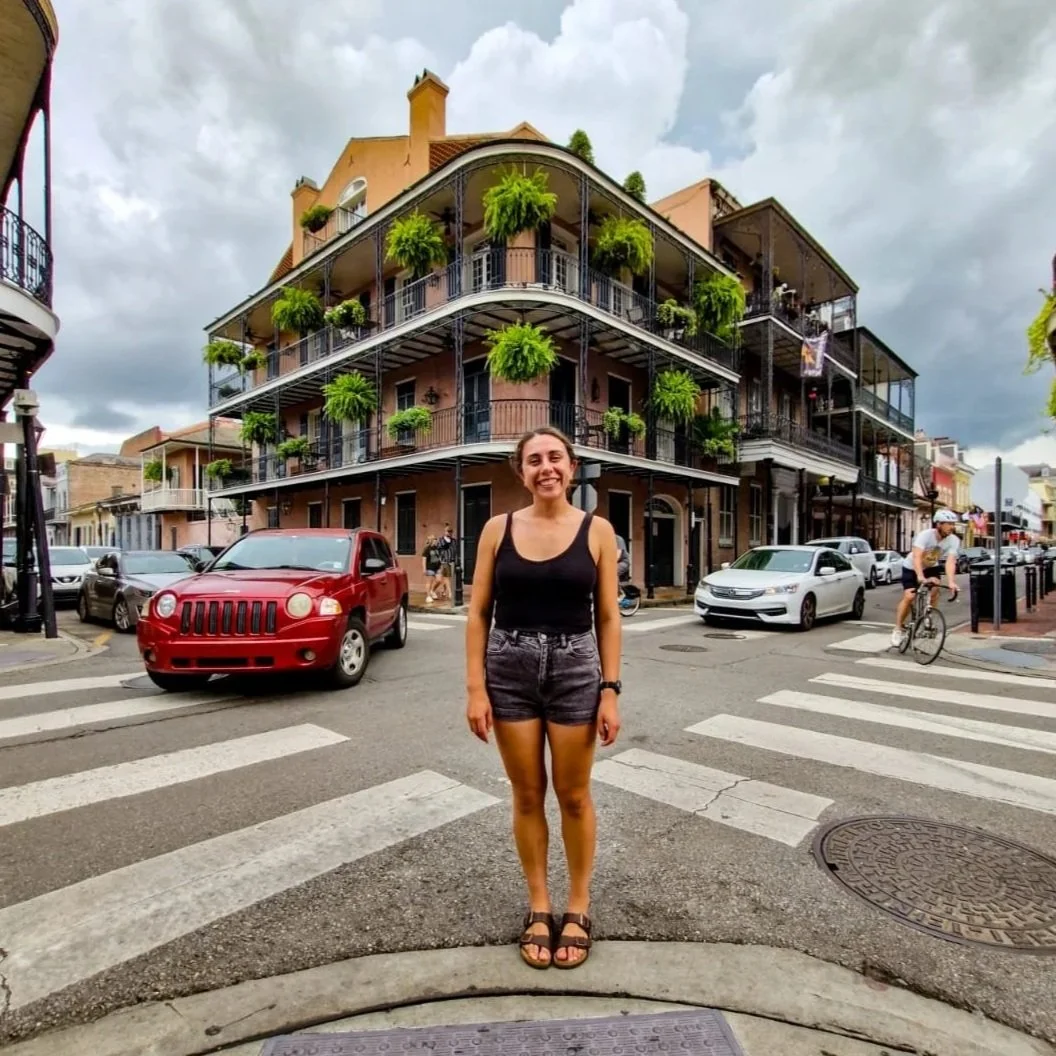
French quarter, New Orleans
And while there is absolutely nothing wrong with enjoying food and eating out while travelling, I started noticing something:
My energy levels weren't quite where they usually are.
I felt more tired, especially towards the end of busy days, and I realised that my nutrition was probably playing a bigger role than I had initially thought. In some places, finding a balanced meal wasn't particularly easy. New Orleans and Las Vegas, for example, are amazing food destinations, but when you're constantly out exploring, a nourishing, balanced meal isn't always the easiest option to find at the exact moment you're hungry.
And because I was moving so much more than usual, I also realised that I wasn't always eating enough to match how much energy I was using. So rather than trying to “eat perfectly” while travelling, I focused on a few simple things that helped me feel more energised.
Here's what I learnt.
1. I had to make sure I was actually eating enough
This was probably my biggest realisation.
I was walking much more than I normally do, sometimes for hours at a time, but my eating didn't always increase to match it. When you're travelling, it's surprisingly easy to accidentally under-eat. You might have a quick breakfast, spend the morning sightseeing, grab something small for lunch and then realise at 5pm that you're absolutely starving.
And that's exactly what I noticed happening to me. Your body needs energy simply to function, and your energy requirements increase when you're more physically active.
So my first focus was simply:
Eat enough.
Rather than thinking about eating less or choosing the lowest-calorie option, I started paying more attention to whether I was actually fueling my body for the amount of activity I was doing. This is especially important if you're travelling somewhere where you're walking a lot, hiking, cycling, swimming or doing other activities.
More movement = your body may need more fuel.
2. I focused on balanced meals
The second thing I noticed was how different my meals looked when I was eating out most of the time. At home, I naturally tend to build meals around a combination of protein, carbohydrates, vegetables or fruit and healthy fats.
While travelling, that structure can disappear. Maybe breakfast is a pastry and coffee. Lunch is a sandwich. Dinner is whatever restaurant happens to be nearby.
Again, there's nothing wrong with this occasionally. That's part of travelling! But when most of your meals start looking like this for several weeks, you may notice a difference in how you feel. So when I had the choice, I started looking for ways to make my meals a little more balanced.
For example:
🍳 Breakfast: oats + milk + fruit
🥗 Lunch: chicken + rice + vegetables
🌯 Quick meal: wrap + protein + salad + avocado
🍝 Dinner: pasta + chicken/seafood + vegetables
It doesn't need to be perfect.
It's simply about asking:
“What could I add to make this meal more balanced?”
3. I definitely wasn't cutting carbohydrates
Travelling actually reminded me how important carbohydrates are for energy, especially when you're moving a lot.
There is often so much messaging around cutting carbs when trying to “eat healthy”, but carbohydrates are an important source of fuel for your body, particularly when you're physically active. And when you're walking around a city for hours, hiking through the mountains or spending the day exploring, you need fuel.
Some of my go-to carbohydrate choices while travelling included:
Bread and wraps
Rice
Pasta
Potatoes
Oats
Fruit
Granola
Where possible, I paired these with protein, fibre and healthy fats to make meals more satisfying.
What about GI?
The glycaemic index (GI) is a way of classifying carbohydrate-containing foods according to how quickly they raise blood glucose. Lower-GI, higher-fibre carbohydrate foods can be useful for supporting a more gradual rise in blood glucose.
Examples include:
Oats
Wholegrain bread
Beans and lentils
Sweet potato
Wholegrain pasta
Quinoa
Some varieties of rice
Whole fruit
But I don't think you need to overthink GI while travelling.
A croissant in Paris, beignets in New Orleans or pasta in San Francisco isn't something you need to “fix”.
Instead, think about your overall pattern of eating and how you can include a variety of nutritious foods most of the time.
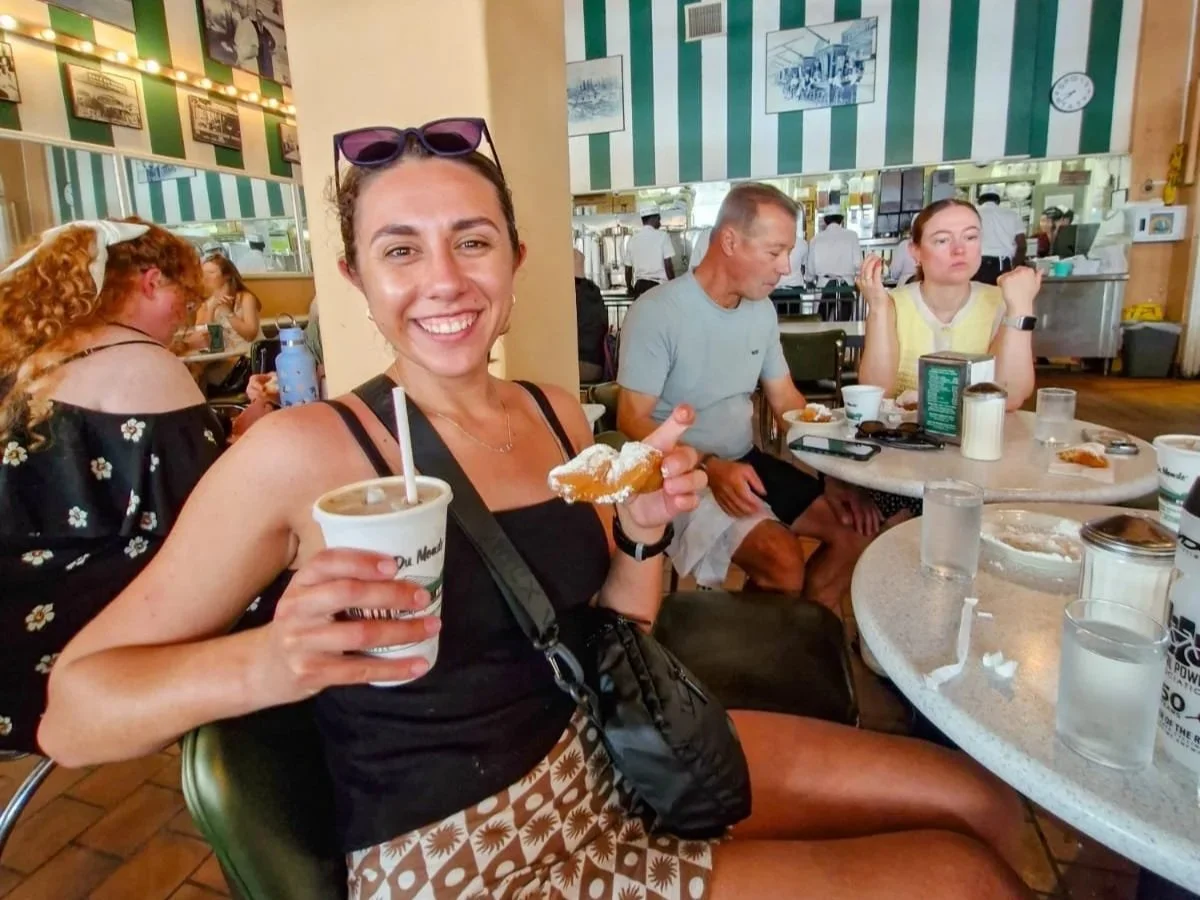
4. Hydration became much more important
This was another one I noticed while travelling.
We were spending a lot of time walking around, often in warm weather, and I wasn't always as good at drinking water as I am at home.
When you're busy sightseeing, it's very easy to go:
“I'll get some water when we get there.”
And then three hours later… you still haven't.
Staying hydrated is particularly important when you're:
Walking or exercising more than usual
Spending time in hot weather
Sweating
Drinking alcohol
Travelling for long periods
So I started making a more conscious effort to carry water with me and drink regularly throughout the day.
And yes, sometimes finding a bathroom became part of the sightseeing itinerary. 😂
5. I tried not to let busy days turn into “I'll eat later”
This one is particularly relevant when travelling. At home, you generally know when you're going to eat. When travelling, your schedule can be completely different every day.
You might be:
Breakfast → sightseeing → sightseeing → sightseeing → “Wait, it's 4pm and I haven't eaten properly.”
Sound familiar?
Rather than waiting until I was extremely hungry, I started thinking ahead. If I knew we'd be out for hours, I'd make sure I had something with me or knew roughly where we'd be able to get food.
Some easy options:
🍌 Fruit
🥜 Nuts
🥛 Yoghurt
🥪 A sandwich or wrap
🍫 A snack bar
🧀 Cheese and crackers
It doesn't have to be elaborate.
Having something available is often better than relying on finding the perfect meal when you're already starving.
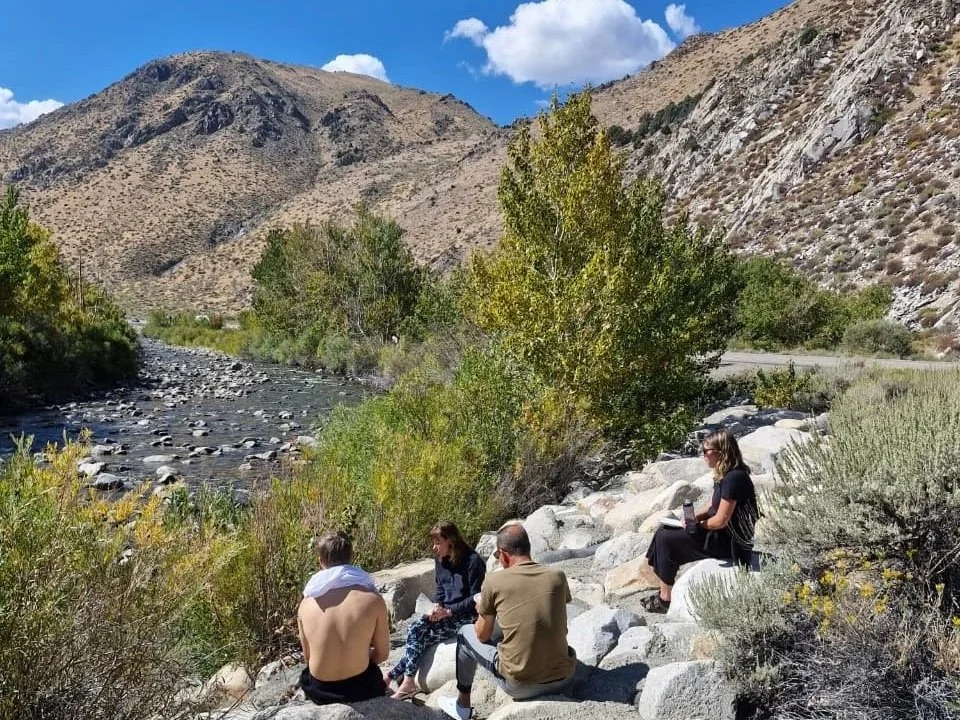
Lunch on the side of the road
6. And then there was coffee…
I'll admit it: coffee was a bit of a challenge.
Not because I needed more caffeine, but because I was looking for a good coffee. 😂 And apparently, good coffee was significantly harder to find in some parts of America than I had anticipated. California definitely helped redeem the situation. But it also reminded me that coffee shouldn't be responsible for keeping you functioning all day.
If you're exhausted at 3pm, ask yourself:
“Do I actually need another coffee, or do I need food, water or a break?”
Caffeine can increase alertness, but it isn't a replacement for adequate food, hydration or sleep.
Sometimes the most effective “energy boost” is simply having lunch.
7. I stopped expecting my nutrition to be perfect
This was probably the most important mindset shift.
I ate foods I don't normally eat. I ate out more. I had dessert. I had cocktails. I had meals that were more indulgent. And that's part of travelling.
Healthy eating doesn't mean turning every holiday meal into a perfectly balanced plate. Instead, I tried to look at my overall pattern.
If breakfast wasn't particularly nutritious, I didn't worry about it. If lunch was a takeaway, dinner could include more vegetables and protein. If I had a big meal, I didn't skip the next meal to “make up for it.” I simply returned to my normal eating pattern.
One meal doesn't determine your health — just like one healthy meal doesn't either.
8. Sometimes tiredness isn't about food
It's also important to say that nutrition isn't the only thing that affects your energy levels.
And after three weeks of travelling, I can definitely confirm that!
There was also:
✈️ Long travel days
🚶♀️ Lots of walking
😴 Different sleep schedules
🌎 Time-zone changes
🧳 Constantly moving between places
🗓️ Very full days
🥂 More socialising than usual
So if you're feeling tired, don't automatically assume you need to change your diet.
Fatigue can have many possible causes, including poor sleep, stress, illness, medications, hormonal changes and nutrient deficiencies, among others.
If you're experiencing persistent or unexplained fatigue, it's worth speaking to your doctor or another healthcare professional rather than trying to solve it through nutrition alone.
So, what actually helped my energy?
Looking back at my trip, I didn't need a special supplement or “energy-boosting” food.
I simply needed to pay more attention to the basics:
Eat enough - Especially when you're moving more than usual.
Build balanced meals - Include protein, carbohydrates, vegetables/fruit and healthy fats where possible.
Don't fear carbohydrates - They are an important source of fuel, particularly when you're active.
Drink regularly - Especially when you're walking, exercising or spending time in warm weather.
Don't accidentally skip meals - Busy days can easily turn into under-eating.
Keep easy food available - Planning ahead makes eating well much easier.
Don't rely on caffeine - Coffee can help with alertness, but it can't replace food, fluids or sleep.
Be flexible - Eating well while travelling doesn't mean eating perfectly.
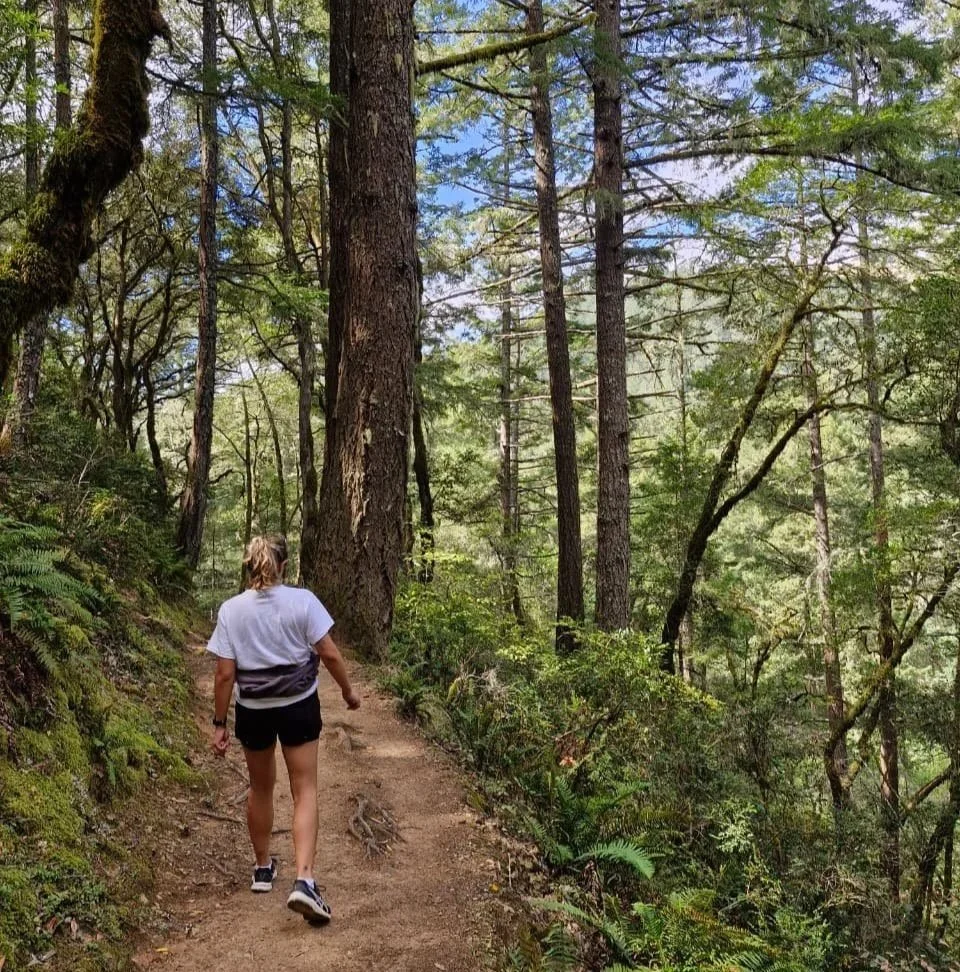
Eating for energy isn't about eating “perfectly”
If there's one thing I took away from my three weeks in America, it's that eating for energy is much more about consistency than perfection.
You don't need to eat perfectly balanced meals every time. You don't need to avoid carbohydrates. You don't need to skip dessert. And you definitely don't need to feel guilty about enjoying the food that's part of your holiday.
Instead, focus on giving your body enough fuel, building balanced meals when you can, staying hydrated and making practical choices that fit your real life.
Because sometimes eating for energy looks like a colourful, home-cooked meal. And sometimes it looks like grabbing a sandwich between two activities because you've already walked 20,000 steps and you need to eat. 😂
Both can be part of a healthy lifestyle.
Nourish your body. Fuel your day. And leave some room for enjoying life, too.
More Resources:
Recipes:
Blogs: